I study how animals respond to climate change by examining the physiological, behavioral, and energetic mechanisms that link organisms to their environments. Integrating biophysical models with empirical data across diverse taxa and ecosystems, my work investigates how mass and energy exchange — heat, water, oxygen, and nutrients — modulate species distributions and evolution in a changing world.
Biophysical constraints on the evolution of lizard morphology
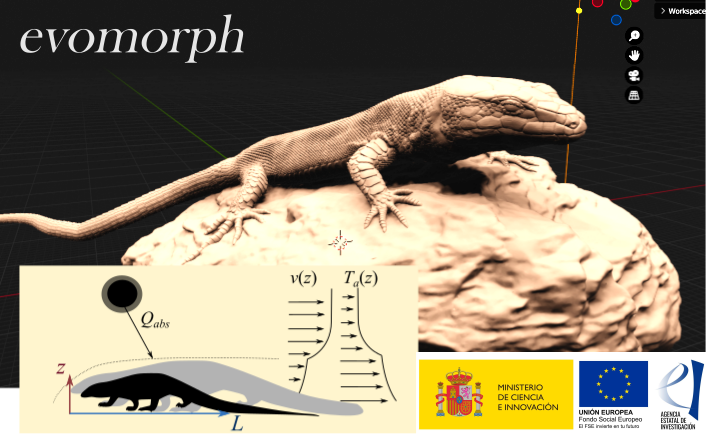
Climate directly impacts the physiological performance and fitness of organisms—particularly ectotherms—driving evolutionary adaptations across multiple thermoregulatory traits, including body size and shape, skin radiative properties, thermal physiology, and behavior.
The EvoMorph project investigates the morphological adaptations of lizards in extreme environments. We combine 3D reconstructions of lizards with biophysical (heat-transfer) models to test how morphology influences body temperature and thermoregulatory capacity. Ultimately, our goal is to uncover the mechanisms driving lizard morphological evolution to build accurate, process-based forecasts of their responses to climate change.
Funding: Spanish National Research Agency (Proyectos de Generación de Conocimiento 2023, Agencia Estatal de Investigación). Grant PID2023-148774NA-I00 | €80,000 (2025–2028).
Assessing the energetic impacts of climate change on biodiversity
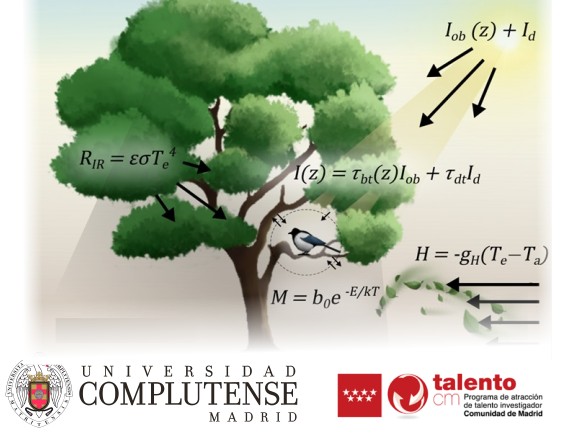
Climate warming challenges the ability of organisms to balance heat and water budgets, affecting homeostasis, survival, and overall fitness. This project aims to quantify the impacts of warming on energy metabolism in both endotherms and ectotherms across global climatic gradients.
By combining biophysical models with empirical field metabolic rates compiled from over three decades of ecological literature, we work to uncover the underlying mechanisms driving animal metabolic responses to thermal fluctuations.
Funding: Talent Attraction Program for Senior Researchers 2022, Comunidad de Madrid (Spain). Ref: 2022-T1/AMB-23753 | €180,000 (2023–2028)
Former projects
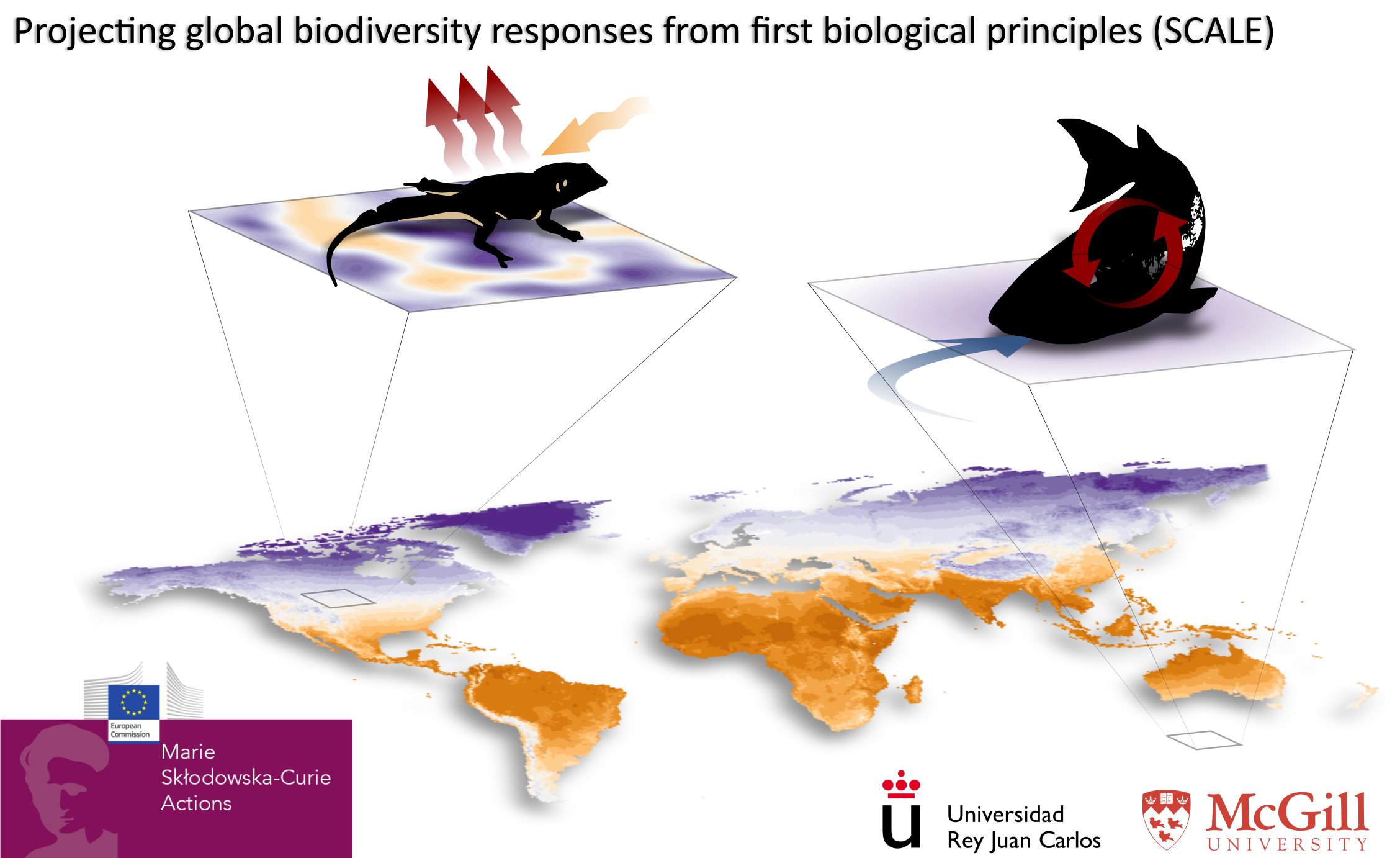
SCALE was a Marie-Curie funded project investigating how heat- and water-transfer mechanisms determine phenotypic traits of animals across global climatic gradients
Juan G. Rubalcaba (MSCA fellow Grant agreement ID: 843094); Jennifer Sunday (supervisor at McGill University, Montreal), Miguel Á. Olalla-Tárraga (supervisor at Rey Juan Carlos University, Madrid).